|
We apologize, but due to the fluctuation in the dollar exchange rate, many of our suppliers are unable to provide us with consistent pricing on the products we purchase from them. Therefore we must also state that prices are subject to change without notice. However, be assured, when you place an order we will contact you for approval before processing any product purchase at a different price than what is stated on the web.
DISCLAIMER: Please read and be sure you thoroughly understand this disclaimer before flying an ultralight aircraft. Paramotors, Powered Paragliders, PPG, PPG Trikes, Hang Glider Trikes, Weight shift Control Trikes - any of these small aircraft that weight less than 254 pounds and have a tank less than 5 gallons are considered Ultralights. These are single-place (solo) flying machines for sport aviation only during daylight hours. Ultralight flying is an extremely demanding sport requiring exceptional levels of attention, judgment, maturity and self discipline. It is unlikely that you will be able to participate in it safely unless you make a conscious and continual commitment to your own safety. Ultralight aircraft flying is an inherently dangerous sport and may result in injury and death even when practiced by a competent pilot using proper equipment. Ultralights are not covered by product liability insurance, nor have they been designed manufactured or tested to any federal or state government airworthiness standards or regulations. Do not fly them unless you are willing to assume personally all risks in the sport of ultralight flying, and all responsibility for any property damage, injury, or death which may result from your use of this activity. Safe operation of any ultralight aircraft requires a pilot proficiency equivalent to that of a Novice Solo Pilot or in some cases a BFI (Basic Flight Instructor), as well as an equivalent level of knowledge and understanding of those wind and weather conditions which may compromise the pilot's safe control of the ultralight. In particular, be advised that gusty winds or turbulent conditions may interfere with even an expert pilot's ability to safely control an ultralight aircraft, and may cause it to crash. Never take anything for granted in aviation. If you are in doubt about anything, stop and figure it out immediately. By purchasing this item, you assume sole responsibility for your safety and hold harmless the retailer and manufacturer for injury or death resulting from your use of this item.
|

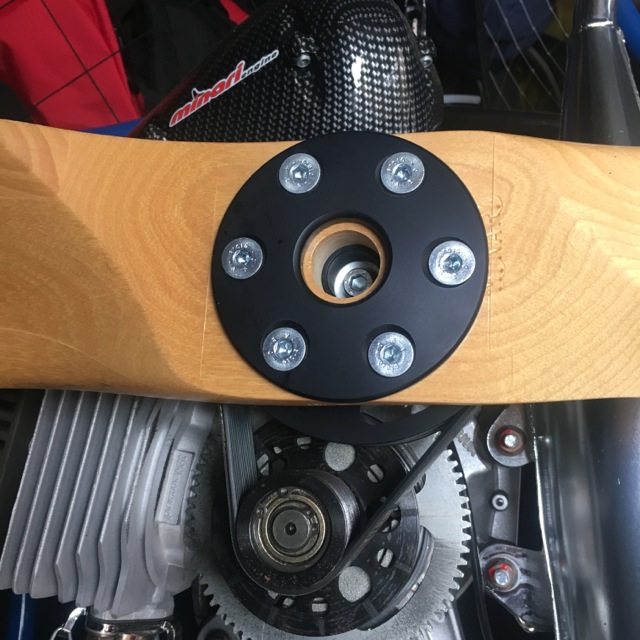
 Install the Propeller with the supplied Propeller Plate (#37), and Bolts (#36).