
AmericanParagliding


Paramotoring and    
Powered Paragliding    

 Why?   Gliders   Packages   Products   Used   Dealers   Weather 

 
Minari Assembly Instructions:

   Assembly
   Muffler
   Spark Plug
   Cage
   Harness
   Propeller
   Priming
   Starting
   Break-In
   Minari Tips
   Minari Parts
   Minari Manual
   Fuel Tips

Paramotoring Products:
   Packages
   Motors
   Wings
   Trikes
   Propellers
   Windsocks
   Tandem Bar
   Reserve Parachutes
   Accessories
   DVD's
   Books
   Used


Minari Paramotor

Minari Paramotor Assembly Instructions


Congratulations on your purchase of the Miniplane Minari Paramotor - The powerful paramotor for heavier pilots and tandem operations!

To the left, you will find our navigation to the Miniplane Minari Assembly Instructions, separated into specific steps to make it easier to follow. You are welcome to give us a call if there are any questions.

Included with your Miniplane Minari is the Minari engine Manual. If none was included, you can view it HERE. Please check that the one you are looking at is the most current, sometimes ones that are included with the unit is an older version (printed). The above link is to the most current Manual.

Our best recommendation is to assemble your new Miniplane Minari Paramotor with your trusted Dealer/Instructor. They will be familiar with how this machine goes together, and will give you lots of great tips and tricks for assembling, starting and maintaining your machine. If you are in the Santa Barbara area, we would be happy to meet with you and help you assemble your new Miniplane Minari Paramotor.

The Articles and Tips to the left have been found to be helpful to keep your Paramotor running in Top condition. Please send us any suggestions you may have to add to this resource at info@Miniplane-USA.com

Happy Flying and Blue Skies!
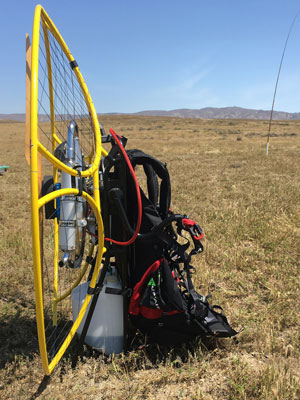
 

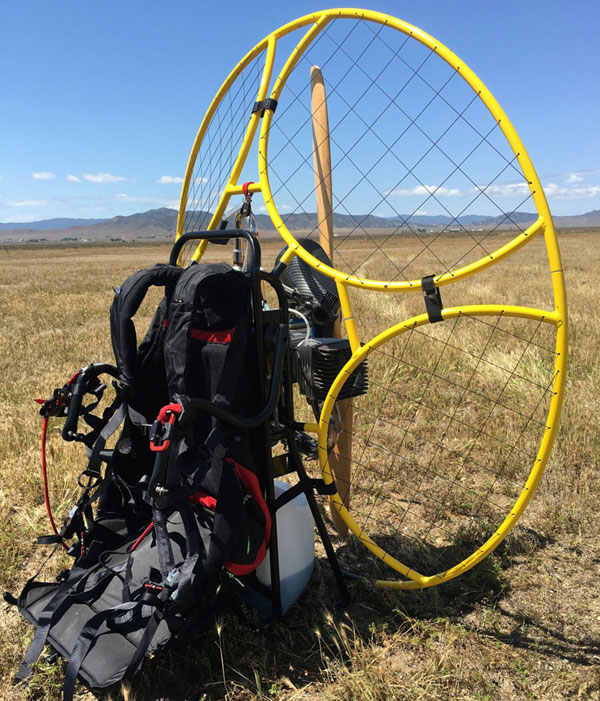
Minari ParamotorIMPORTANT!!! Please Read This:

This is a 2-stroke engine and it MUST have oil mixed with the fuel!

As for fuel, we recommend the use of Avgas 100LL aviation fuel or premium ethanol free gasoline (see Fuel Tips), mixed with a good fully synthetic 40:1 2-stroke oil. Minari has stated that Avgas is OK to use with their engine, and this is our recommendation of fuel for so many reasons.

Failure to mix the proper Synthetic Oil with your fuel even once at the proper ratio will cause your engine to seize and void the warranty of your machine!


Breaking in your new Minari engine

New engines generate a lot more heat and this is what can cause them to seize unless they are carefully broken in. When you start the engine for the first time, run it at a fast idle until it reaches normal operating temperature (when the cooling fins of the engine are too hot to touch) and then for at least an additional 10 minutes. Readjust the carburetor at this time (see the “Basic Carburetion” instructions on page EN 15 and page IT 8). Readjustment is required whenever there is any change in the engine operating conditions such as ambient operating temperature and/or changes in altitude.

During the first 20 liters of fuel use, do NOT run the engine at full throttle/maximum RPM for more than a few minutes. If you have a CHT, keep the operating temperature below 390-420 degrees Fahrenheit until the engine is fully broken in.


Maintenance Schedule

Your new Miniplane Minari Paramotor has a schedule of regular maintenance that needs to be done as early as 10 hours of run time. Most things are easy and quick, such as to re-torque the head and check belt tension. Please refer to the Minari Manual for these important service recommendations for your machine.


Online Resources:
Minari User's Manual

 Why?   Gallery   Products   Used   Dealers   Weather 
American Paragliding Home Page

Contact Us:
info@americanparagliding.com


All the information and images published in this website are property of AmericanParagliding.com unless stated otherwise.
Reproduction of any part of these contents (info, graphics & pictures) by other website or media is strictly forbidden,
unless specially authorized by AmericanParagliding.com
© AmericanParagliding 2002– 2025
Please respect the rights and intellectual property of this Web site.

We apologize, but due to the fluctuation in the dollar exchange rate, many of our suppliers are unable to provide us with consistent pricing on the products we purchase from them. Therefore we must also state that prices are subject to change without notice. However, be assured, when you place an order we will contact you for approval before processing any product purchase at a different price than what is stated on the web.

DISCLAIMER: Please read and be sure you thoroughly understand this disclaimer before flying an ultralight aircraft. Paramotors, Powered Paragliders, PPG, PPG Trikes, Hang Glider Trikes, Weight shift Control Trikes - any of these small aircraft that weight less than 254 pounds and have a tank less than 5 gallons are considered Ultralights. These are single-place (solo) flying machines for sport aviation only during daylight hours. Ultralight flying is an extremely demanding sport requiring exceptional levels of attention, judgment, maturity and self discipline. It is unlikely that you will be able to participate in it safely unless you make a conscious and continual commitment to your own safety. Ultralight aircraft flying is an inherently dangerous sport and may result in injury and death even when practiced by a competent pilot using proper equipment. Ultralights are not covered by product liability insurance, nor have they been designed manufactured or tested to any federal or state government airworthiness standards or regulations. Do not fly them unless you are willing to assume personally all risks in the sport of ultralight flying, and all responsibility for any property damage, injury, or death which may result from your use of this activity. Safe operation of any ultralight aircraft requires a pilot proficiency equivalent to that of a Novice Solo Pilot or in some cases a BFI (Basic Flight Instructor), as well as an equivalent level of knowledge and understanding of those wind and weather conditions which may compromise the pilot's safe control of the ultralight. In particular, be advised that gusty winds or turbulent conditions may interfere with even an expert pilot's ability to safely control an ultralight aircraft, and may cause it to crash. Never take anything for granted in aviation. If you are in doubt about anything, stop and figure it out immediately. By purchasing this item, you assume sole responsibility for your safety and hold harmless the retailer and manufacturer for injury or death resulting from your use of this item.