AmericanParagliding


Paramotoring and    
Powered Paragliding    

 Why?   Gliders   Used   Weather 
Training:
   Flight Training
   Powered Paragliding
   Why Paramotor?
   Why Certified?

From Free Flight to Paramotoring and vice versa...

Crossing Over


Pilots wishing to cross over from Paragliding (PG) to Powered Paragliding (PPG) or PPG to PG can now enroll in a special clinic designed just for this purpose. Broaden your horizons today and enjoy more airtime by expanding your knowledge and flying skills in our unique aircraft!

The biggest advantage to crossing over is increasing your ability to fly more often, at more times during the day, and at more locations.

While there are many similarities, there are some different and specific techniques and skills to learn that will make each discipline safer and more fun. To enroll in this class, pilots must be proficient in either PG or PPG. Additional instruction may be necessary to earn certification for either sport. Read our article about Crossing Over, which appeared in Paraglider Magazine.

Our school is uniquely qualified to teach crossing over, as we actively fly both ways on a daily basis. We have specific study materials for each type of flying to help you understand both the similarities and the differences.

PG to PPG
Free flight pilots wanting to fly with a paramotor will learn about their particular motor unit, setup, preflight, launch techniques, flying considerations, landing, safety, airspace limitations, motor care and transport.

Clinic will include flight simulator work to allow the pilot to feel the sensations and develop responses appropriate for powered flight. If the pilot has met the requirements for certification, the USPPA PPG1 and PPG2 tests can be administered.

Proficient PG pilots will usually take 2 days to complete the Crossing Over Clinic. Skill permitting, the final day of this clinic will include the pilot's first solo powered flights. Students must have their own equipment or purchase the gear from us, or there is an extra charge for using our motor for training.

PPG to PG
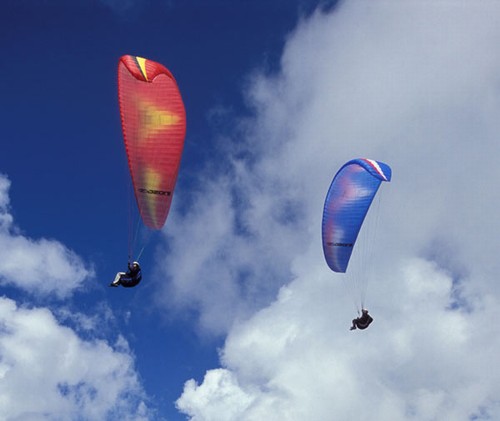
Powered Paraglider pilots can now learn the techniques to fly without power and take advantage of natural lift sources available, such as ridge lift and thermal soaring.

We will cover Setup and Preflight, launching techniques, flying skills such as seat-steering or weight-shift, landing zone proximity, approach and landing, advanced kiting techniques and appropriate weather observations. Class includes simulator work to better understand correct flying posture and brake toggle inputs appropriate for non-powered free flight.

If the pilot has met the requirements for certification, the USHGA P1 and P2 tests may be administered.

It will typically take 2 days for proficient PPG pilots to complete the Crossing Over Clinic. This clinic includes many solo flights to master and demonstrate solo flying skills to the instructor.


Prerequisites?
This course is focused on the hands on skills necessary to fly. It assumes the pilot is well versed in the ground school topics of:

  • Equipment
  • Weather
  • Active Piloting
  • Staying Legal
  • Aerodynamics
  • Soaring Lifting Air
  • Reserve Parachute
  • Risk Management

and can demonstrate this knowledge when speaking with the instructor and when taking the written exams.

If you feel you need more instruction in these topics, minimally purchase and read a copy of Paragliding: A Training Manual or The PPG Bible. Better yet, arrange for ground school classes with one of our instructors.


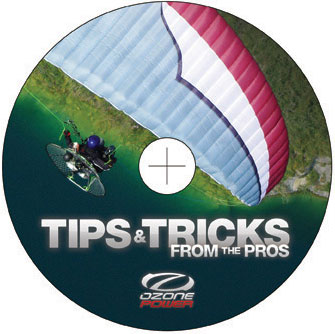
New DVD: Paramotor Tips & Tricks from the Pros

The world's leading PPG pilots talk technique, explaining and demonstrating the most important PPG skills.

This exciting DVD contains more than two hours of explanations and demonstrations by the world's top pilots. Join these professional pilots in discovering the best of both the newest and the most time-tested techniques. Watch the Ozone Team break down the most crucial aspects of PPG flight in a simple and easy to understand manner. Launch technology, in flight maneuver, and landing strategies are just the beginning...

This DVD is perfect for Paraglider pilots considering crossing over to Paramotoring!

Learn More!


Featuring the Powerful
Top 80 Engine


The philosophy of a reliable mini-motor, combined with optimizing the resonance of the exhaust provides the pilot:

  • Light weight
  • Less vibration
  • Easier to start
  • Less fuel; less to carry
  • Less weight means a lighter frame
  • Less weight in flight means you can use a paraglider that is smaller and easier to inflate
  • Less weight gives you the ability to launch easier and under control - not struggling with a heavy load

The increase in performance of modern paragliders makes it possible to fly with almost one-half the power of a few years ago.

A little two-stroke engine, built with modern technology, can offer more then enough reliable power and much less weight. This makes the critical take-off run easier and safer.

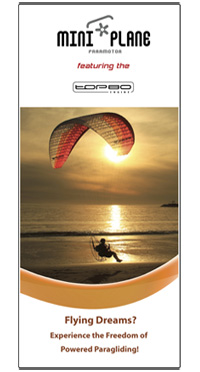
Click the image to the right to see and download our new Miniplane-USA Brochure!

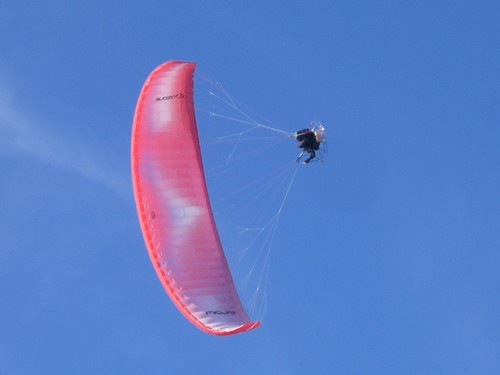
The Miniplane ABM Paramotor with the Low Hangpoint Weight Shift Harness allows the pilot to feel their glider and the air! Couple this lightweight, yet powerful motor with a modern efficient paraglider, and you have the recipe for much more airtime!


Featuring Wings By:

Ozone Paragliders
 
Skywalk Paragliders
 
MacPara Paragliders
 
Gin Gliders
 
Nova Paragliders
 
Gradient Paragliders
 
Advance Paragliders
 
Freex Paragliders
 
Airwave Paragliders
 
Pro Design Paragliders
 
Swing Paragliders
 
Apco Aviation

 Why?   Gliders   Used   Weather 
American Paragliding Home Page

Contact Us:
info@americanparagliding.com

American Paragliding Home Page


All the information and images published in this website are property of AmericanParagliding.com unless stated otherwise.
Reproduction of any part of these contents (info, graphics & pictures) by other website or media is strictly forbidden,
unless specially authorized by AmericanParagliding.com
© AmericanParagliding 2002– 2026
Please respect the rights and intellectual property of this Web site.

We apologize, but due to the fluctuation in the dollar exchange rate, many of our suppliers are unable to provide us with consistent pricing on the products we purchase from them. Therefore we must also state that prices are subject to change without notice. However, be assured, when you place an order we will contact you for approval before processing any product purchase at a different price than what is stated on the web.

DISCLAIMER: Please read and be sure you thoroughly understand this disclaimer before flying an ultralight aircraft. Paramotors, Powered Paragliders, PPG, PPG Trikes, Hang Glider Trikes, Weight shift Control Trikes - any of these small aircraft that weight less than 254 pounds and have a tank less than 5 gallons are considered Ultralights. These are single-place (solo) flying machines for sport aviation only during daylight hours. Ultralight flying is an extremely demanding sport requiring exceptional levels of attention, judgment, maturity and self discipline. It is unlikely that you will be able to participate in it safely unless you make a conscious and continual commitment to your own safety. Ultralight aircraft flying is an inherently dangerous sport and may result in injury and death even when practiced by a competent pilot using proper equipment. Ultralights are not covered by product liability insurance, nor have they been designed manufactured or tested to any federal or state government airworthiness standards or regulations. Do not fly them unless you are willing to assume personally all risks in the sport of ultralight flying, and all responsibility for any property damage, injury, or death which may result from your use of this activity. Safe operation of any ultralight aircraft requires a pilot proficiency equivalent to that of a Novice Solo Pilot or in some cases a BFI (Basic Flight Instructor), as well as an equivalent level of knowledge and understanding of those wind and weather conditions which may compromise the pilot's safe control of the ultralight. In particular, be advised that gusty winds or turbulent conditions may interfere with even an expert pilot's ability to safely control an ultralight aircraft, and may cause it to crash. Never take anything for granted in aviation. If you are in doubt about anything, stop and figure it out immediately. By purchasing this item, you assume sole responsibility for your safety and hold harmless the retailer and manufacturer for injury or death resulting from your use of this item.