Bailey Aviation Paramotors
|

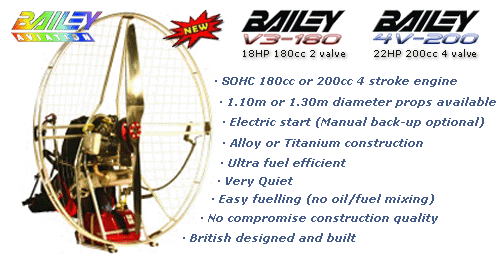
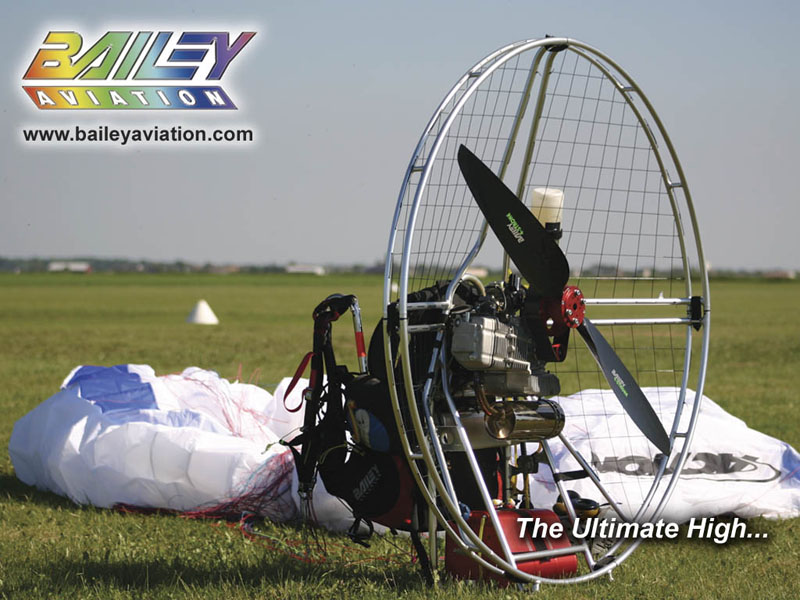
2009 saw the introduction of two all new, third generation 4 stroke engines, known as the V3-180 and 4V-200. The V3-180 is an 18HP, 180cc, 2 valve engine that directly replaces our 4stroke175 and features a number of improvements; 1kg lighter, more compact in every dimension, more powerful, improved cooling, provision for electric start with manual back-up, increased oil capacity, improved oil filtration/scavenging and much more.
The 4V-200 engine is based on the V3-180, but has a capacity of 200cc (22HP) and features a unique 4 valve cylinder head, ideally suited to paramotor pilots that weigh over 110Kg or the perfect answer for self-builders of trikes, ultralights or powered hanggliders, looking for economical, reliable 4 stroke power.
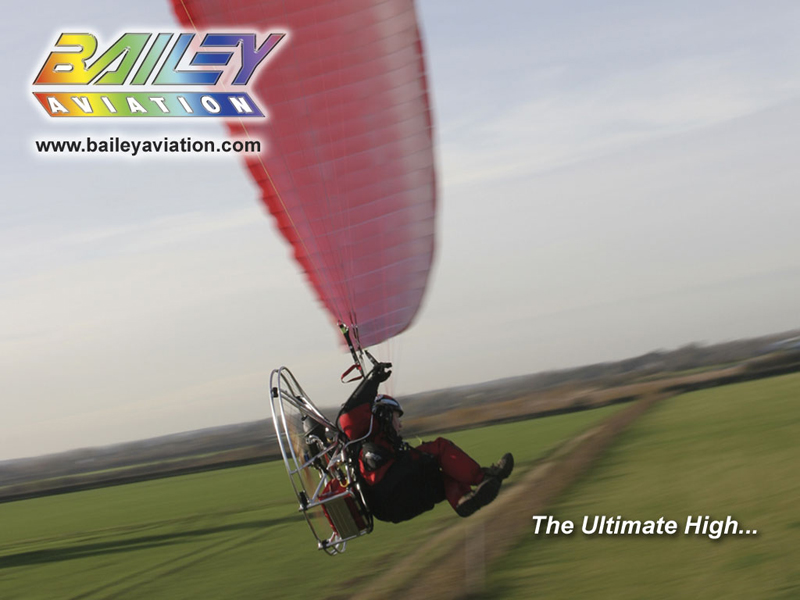
Our 'World First' 4 stroke paramotors have proved devastatingly effective over the last 6 years in competitions, with many UK, French, Spanish, European and World Championship podium positions. Bailey Aviation machines are the leading choice for competition pilots, long XC pilots and fun-flyers alike. The 4 stroke design provides a superbly linear power delivery, smooth from idle to the higher RPM limits, far removed from the peaky power delivery of some 2 stroke designs. Many pilots are enjoying the extra flying time our fuel-efficient 4 stroke design offers, with 4+ hours flights now possible from a 10 litre fuel load (15 litre tank optional).
 The Bailey 4 stroke is a single cylinder SOHC design and features CNC machined alloy crankcases, pressure compensating carburettor, stainless steel exhaust, Poly-V belt drive reduction, high power CDI ignition and electric starting system. The Bailey 4 Stroke engines are compact and weigh in at 18.3Kg (V3-180) or 19.5Kg (4V-200) with all ancillaries (but minus battery pack).
But are the 4 strokes heavier?
Many people are apprehensive at the dry weight of our 4 stroke paramotor compared to a 2 stroke counterpart, without understanding the affective advantages of the design. There are currently many 30kg + paramotors available, most having a fuel consumption of 4-6 litres / hour. This means that when fuelling for a 2-hour flight on such a machine it would require the loading of 10 litres (7.20kg) of fuel, bringing the total take-off weight to 37.20kg. A similar flight on a Bailey 4 Stroke that uses 2 litres/hour would only need 4 litres (2.88kg) of fuel, resulting in a take off weight of only 36.38kg. When contemplating the weight of a Bailey 4 Stroke, the fuel load has to be taken into consideration, as the 4 Stroke is very economical.
 All Bailey Aviation paramotors are supplied with the following standard features:
- Helix Carbon-composite 2 blade propeller (1.1m or 1.3m available)
- 4 piece double hoop safety cage (Alloy or Titanium available)
- Sup'Air Bespoke harness with carry pockets and attached speed bar pulleys
- 10 liter aluminium fuel tank with dry break coupling and sight gauge
- Stainless steel hang bars (mid or low types available)
- Padded Bailey Aviation propeller covers
- Padded Bailey Aviation cage quarter bag
- Operation and Maintenance manual
Bailey Paramotor Specifications