AmericanParagliding


Paramotoring and    
Powered Paragliding    

 Why?   Gliders   Packages   Products   Used   Dealers   Weather 


Paramotor Tandem Trainee Clinic

Sharing the Friendly Skies with Others


USPPA Tandem TT Clinic


USPPA Powered Paragliding Tandem Trainee's Clinic

The Tandem Instructor Rating is regarded as the highest rating a pilot can achieve according to our organization. Tandem Instructors represent our sport to the general public where our actions here are highly scrutinized as well as experienced asnd enjoyed by the tandem student passengers!

It provides an excellent and safe instructional opportunity for students and is worth preserving. Abuse, like advertising it as a way to give “joy rides” for pay will likely get the ability to do this revoked again. Flights tandem flights must ONLY be instructional in nature.

The program provides reasonable guidelines for those aspiring to give tandem instruction, reflecting the current state of wheel-launch. It is based on having the tandem pilot learn using a qualified PPG pilot as "passenger" before setting out with new students.


Ratings:
There is a Tandem Trainee (TT), Tandem Instructor (TI) and Tandem Administrator (TA).

The goal of this clinic is to certify Tandem Trainee Pilots. A Tandem Trainee, once signed off, will only fly with qualified pilots (see below) to accumulate the flight requirements necessary to proceed to Tandem Instructor.

Tandem Instructors have the authorization to take up students, including those with no experience, on training flights for hire.

Tandem Administrators are experienced tandem pilots approved by the training committee to administer the Tandem program.

A qualified pilot is one of the following: 1) USPPA/USUA PPG2 or higher, 2) USHPA P2 or higher.

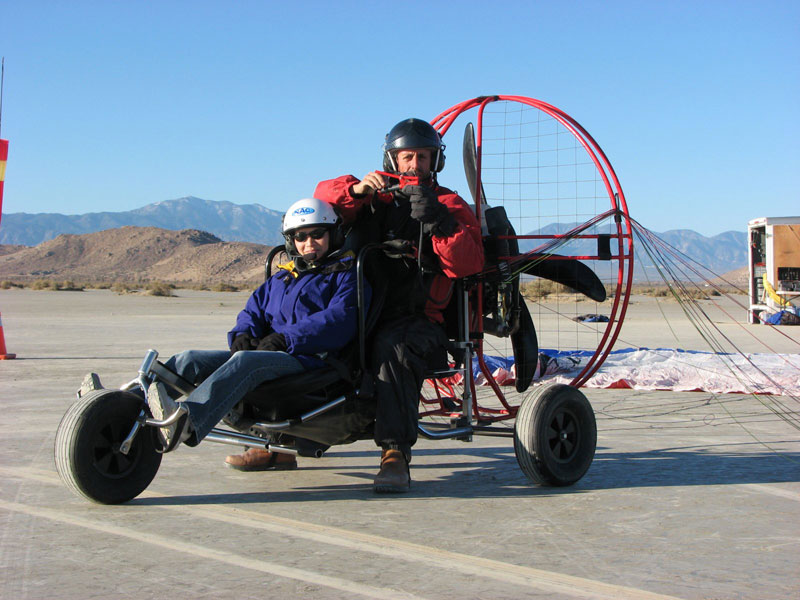
USPPA Tandem Wheeled Ratings: Pilots wishing to be able to teach Wheeled Launch techniques in a Tandem Trike must first get their PPG1, 2 & 3 and Instructor ratings for Wheeled Launch.


Included Clinic Subjects:

  • Passenger briefings and paperwork
  • Preflight checklist
  • Launching and landing techniques
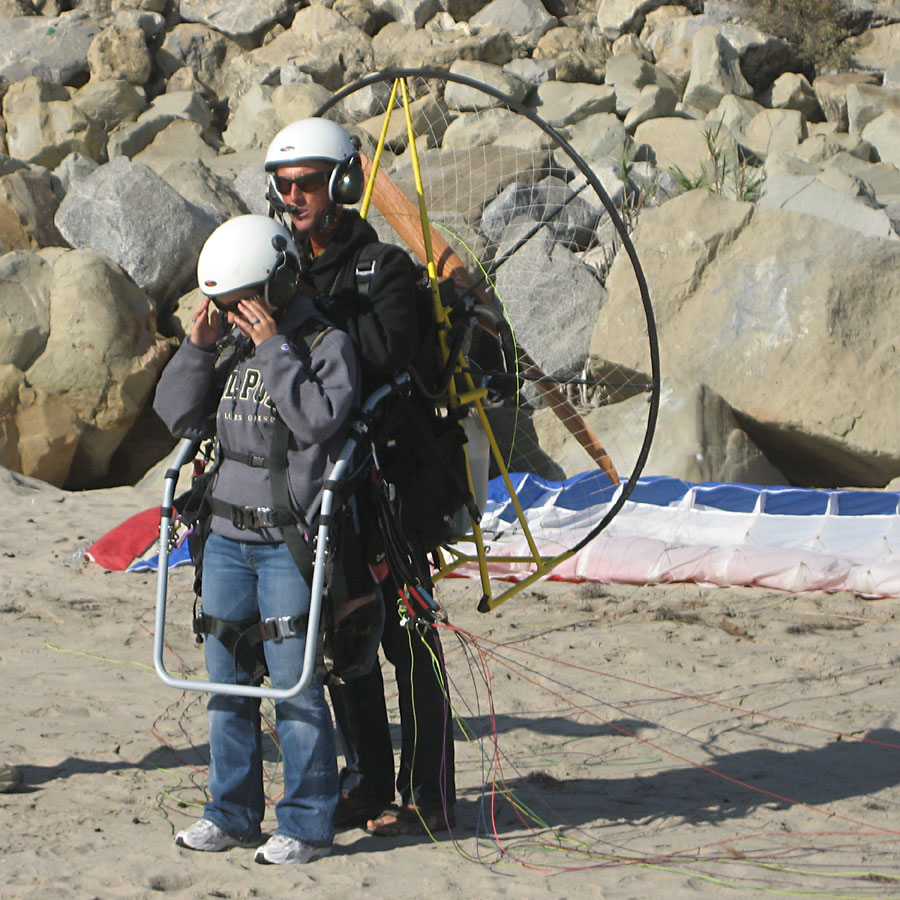
  • Seating the passenger and assuring their comfort
  • USPPA Rating Program and Flight Requirements (PDF)
  • FAA Tandem Exemption and what it means
  • Proper equipment and attire
  • "Wild Card" scenarios - what might happen while performing PPG Tandem Flights
  • Wheeled Launch Tandem Techniques


Please note: Simply attending and participating in this clinic does not guarantee a Tandem Trainee Rating. You must have all of the qualifications and demonstrate appropriate judgement and skills to the Tandem Administrator(s) satisfaction in order to attain this rating.

Tandem Trainee (TT)

This form of flying takes place between a qualified USPPA instructor and consenting qualified pilot. This rating can be given by Tandem Instructors after administering the written examination and witnessing the proper flight skills utilizing the designated launch method. No remuneration is allowed for flying done by a TT. Applicants must meet the following requirements:

  1. Current USPPA Instructor, FL for tandem FL and WL for tandem WL.

  2. Minimum 100 flight hours or 300 flights of logged incident free airtime hours on a powered paraglider.

  3. The applicant must have logged at least 100 solo or tandem launches.

  4. (FL) Ability to consistently perform zero-wind and light-wind landings culminating in the slowest possible ground speed at the moment of the flare and when the pilot's/passenger’s feet first contact the ground.

  5. Candidates will have a reputation/ history of being appropriately conservative, safe, and highly skilled pilots with judgment commensurate with the task of 2-place operation.

  6. At least 1 logged tandem flight as a passenger with a Tandem Instructor (TI) or Tandem Administrator (TA).

  7. At least 5 flights as the flying pilot (from the instructor’s position) with the TT or TA as the second occupant.

  8. Successful completion of a written test administered by the TI/TA.

  9. Successful completion of a Tandem Clinic to be administered by the TI/TA who attests that the applicant meets all requirements. This test/training will include, as a minimum, a passenger briefing, checklist use, and successful tandem launches and landings. The test/training must include:

    For a tandem foot launch (TFL) rating the test must include at least 3 successful tandem foot launches including one in wind less than 3 mph (may be simulated).

This rating is only intended for tandem instructor trainees to build experience. The rating is only valid for 30 tandem flights or one calendar year, whichever comes first but may be renewed by a TA in the case of extenuating circumstances that force the pilot to cease flying activities for a period of time.


 Why?   Gallery   Products   Used   Dealers   Weather 
American Paragliding Home Page

Contact Us:
info@americanparagliding.com


All the information and images published in this website are property of AmericanParagliding.com unless stated otherwise.
Reproduction of any part of these contents (info, graphics & pictures) by other website or media is strictly forbidden,
unless specially authorized by AmericanParagliding.com
© AmericanParagliding 2002– 2025
Please respect the rights and intellectual property of this Web site.

We apologize, but due to the fluctuation in the dollar exchange rate, many of our suppliers are unable to provide us with consistent pricing on the products we purchase from them. Therefore we must also state that prices are subject to change without notice. However, be assured, when you place an order we will contact you for approval before processing any product purchase at a different price than what is stated on the web.

DISCLAIMER: Please read and be sure you thoroughly understand this disclaimer before flying an ultralight aircraft. Paramotors, Powered Paragliders, PPG, PPG Trikes, Hang Glider Trikes, Weight shift Control Trikes - any of these small aircraft that weight less than 254 pounds and have a tank less than 5 gallons are considered Ultralights. These are single-place (solo) flying machines for sport aviation only during daylight hours. Ultralight flying is an extremely demanding sport requiring exceptional levels of attention, judgment, maturity and self discipline. It is unlikely that you will be able to participate in it safely unless you make a conscious and continual commitment to your own safety. Ultralight aircraft flying is an inherently dangerous sport and may result in injury and death even when practiced by a competent pilot using proper equipment. Ultralights are not covered by product liability insurance, nor have they been designed manufactured or tested to any federal or state government airworthiness standards or regulations. Do not fly them unless you are willing to assume personally all risks in the sport of ultralight flying, and all responsibility for any property damage, injury, or death which may result from your use of this activity. Safe operation of any ultralight aircraft requires a pilot proficiency equivalent to that of a Novice Solo Pilot or in some cases a BFI (Basic Flight Instructor), as well as an equivalent level of knowledge and understanding of those wind and weather conditions which may compromise the pilot's safe control of the ultralight. In particular, be advised that gusty winds or turbulent conditions may interfere with even an expert pilot's ability to safely control an ultralight aircraft, and may cause it to crash. Never take anything for granted in aviation. If you are in doubt about anything, stop and figure it out immediately. By purchasing this item, you assume sole responsibility for your safety and hold harmless the retailer and manufacturer for injury or death resulting from your use of this item.